When we think about scientific discoveries, we often imagine scientists in lab coats conducting experiments. While this has long been the norm, recent advances in robotics and artificial intelligence (AI) are rapidly shifting the landscape. A new and emerging field known as autonomous or “self-driving” laboratories is challenging the conventional idea of experimentation. Like self-driving cars, which operate with little human intervention, self-driving labs are designed to run experimental protocols, fast-track scientific discoveries, and generate rigorous, reliable data.
A Brief Human-Machine History
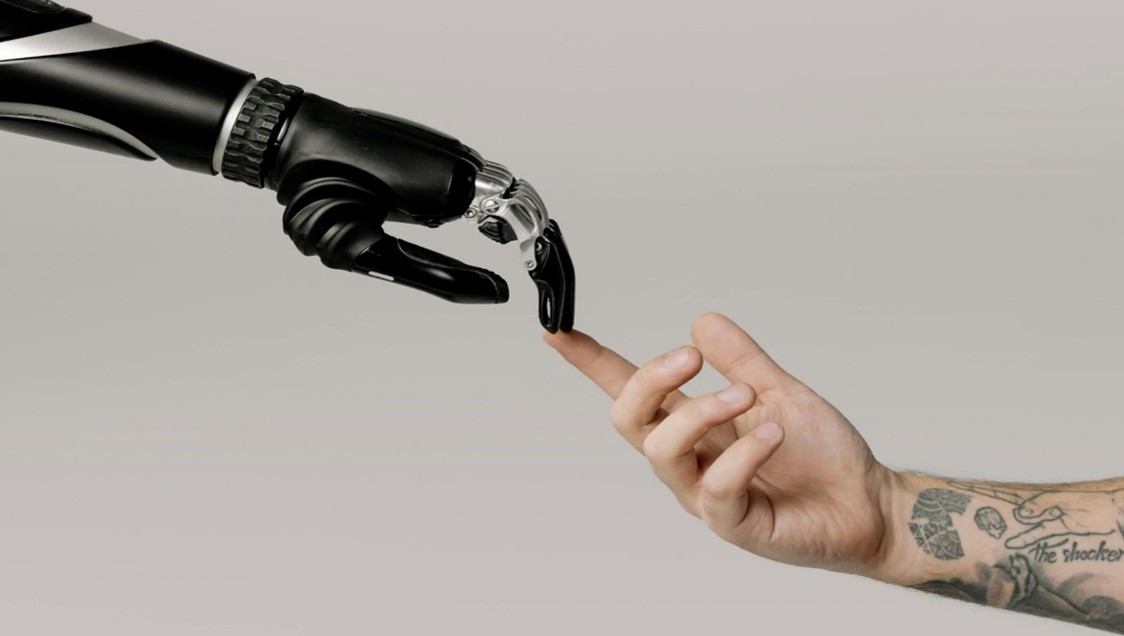
However, automation is not a new concept. Since early human history, we have created and engineered tools to perform tasks more efficiently. As early as ancient Egypt, mechanical statues have been documented as early forms of automation , with the purpose of imitating life. These innovations laid the groundwork for mechanical principles and the foundation of labor automation.
In the United States, modern industrial manufacturing was revolutionized in the early 20th century by the Ford Motor Company. In 1946, Delmar S. Harder (1892–1973), Vice President for Manufacturing at Ford, introduced the term “automation” to describe the integration of automatic machines into a system of production processes aimed at reducing and simplifying labor through mechanized systems. History shows that human-machine interaction is rooted in curiosity and problem-solving and continues to evolve. Over time, the concept of automation has expanded beyond manufacturing to fields like pharmaceuticals, computing, and laboratory science. This technological evolution drives today’s vision for autonomous laboratories.
What is an Autonomous Lab?

An autonomous or self-driving lab is a scientific space where machines, not humans, suggest, execute, and analyze experiments, depending on the degree of autonomy. These labs are often equipped with robotic arms, automated liquid handlers, and AI systems working in tandem to conduct experiments with minimal human intervention. These labs are predicted to lower costs, run 24/7, and require fewer specialized personnel. Even though technicians are still needed for maintenance and troubleshooting, the core experimental workload can be handled autonomously. The goal isn’t to replace scientists but to relieve them of repetitive, time-consuming tasks, allowing more focus on hypothesis generation, high-level interpretation, and creativity.
While automation handles physical tasks, AI is the brain of the operation. In recent years, “artificial intelligence” has been increasingly used to describe computer systems that mimic cognitive functions like pattern recognition and decision-making.
A prominent example is Large Language Models (LLMs) like OpenAI’s ChatGPT, which can analyze data, summarize results, and suggest subsequent steps. But AI in self-driving labs goes far from that. It can include machine learning algorithms that analyze experimental outcomes and determine how to optimize future protocols. Both sides of this technology, AI and robotics, form a powerful duo: AI makes intelligent decisions, and robotics executes them.
To put it into perspective, a self-driving lab can be compared to a Ph.D. level scientist running endless trials of experimental design, testing, and analysis, continuously reframing ideas based on new data. The difference? The self-driving lab doesn’t rest; it runs 24/7.
Another key benefit is addressing the reproducibility crisis in science. Studies estimate that nearly 70% of scientists struggle to reproduce others’ findings. By automating every step of an experiment, self-driving labs can increase consistency and transparency, which is vital for scientific credibility.
Current Examples

Companies like Opentrons are leading in biotechnology automation. Their Opentrons Flex, OT-2, and Flex Prep systems are widely used in life sciences research. These robots can automate common lab protocols from pipetting to plate transfers and are compatible with open-source software, making automation more accessible to researchers and startups alike.
Academia is also entering the field; self-driving labs are transitioning from industry to the classrooms. One notable example is Carnegie Mellon University, which is collaborating with Emerald Cloud Lab to create the first fully remote, AI-integrated lab accessible to students and researchers.
Despite the excitement, self-driving labs are not poised to replace human scientists anytime soon. This is why many experts anticipate a hybrid model will be the best for workflows where AI and robotic automation assist in experimentation, while human scientists remain essential. What’s changing is the role of the scientist and the scientific paradigm, the way that we perceive a scientist’s responsibilities in the lab.
While the long-term vision for some is to achieve fully autonomous laboratories, current technological limitations still pose significant challenges. Although autonomous systems have already been demonstrated, they are typically limited to low-complexity experiments. For example, automating the process to identify the optimal temperature for enzyme thermostability has been successfully achieved using current autonomous platforms. However, as experimental designs become more complex and involve diverse protocols, significant hurdles emerge in integrating and adapting these conditions into an automated workflow.

Self-driving labs are not valuable because they will “replace” scientists, but because they relieve them of repetitive tasks, enabling researchers to focus on what truly drives discovery: designing experiments, interpreting results, and shaping the direction of scientific inquiry. As scientists and technology continue to work in unison, this collaborative effort will define the next era of scientific research.
About the Author
Damián is a PhD student in the Hoarfrost Lab at the Institute of Bioinformatics at the University of Georgia. His current research focuses on microbial ecology and artificial intelligence, with the goal of predicting phenotypic behaviors of microbial communities that play an essential role in the carbon cycling process. He earned his undergraduate degree from the Interamerican University of Puerto Rico, majoring in Microbiology and minoring in Computer Science. When Damián isn’t working on his research, you’ll probably find him running, hitting the gym, or singing in the shower.