Blog

From Caves to Cures: How Blind Fish and Fruit Bats are Unlocking New Diabetes Treatments

With over 2 million species on this planet, adaptation is a crucial part of species survival. Adapt or fail, if you will. With some species, this means becoming more generalist, while for others, this leads to niche specialization. These adaptations, or modifications even, have both inspired human technologies and led to advancements in human medicine.

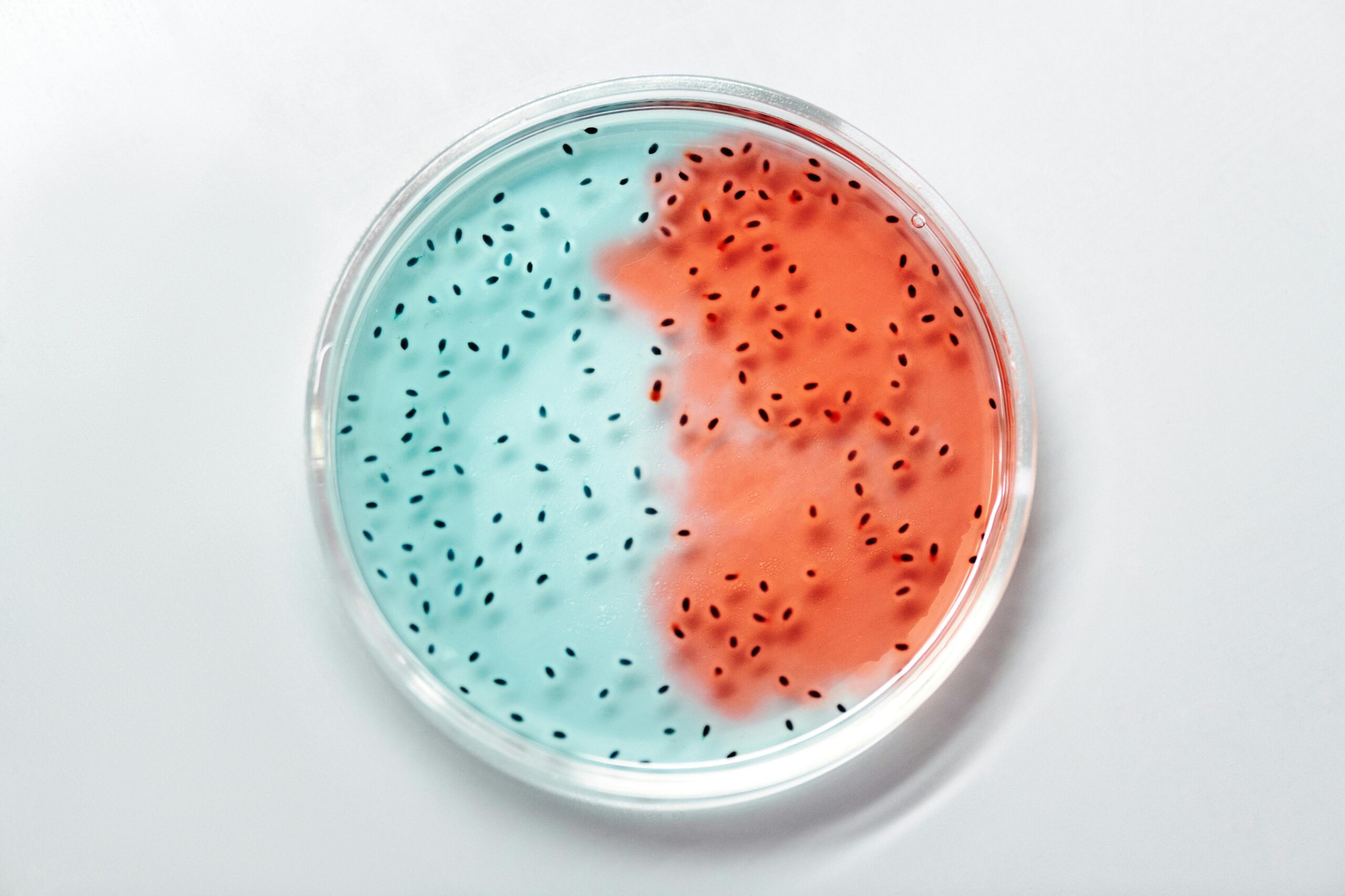
Close-up of vibrant blue and red bacteria cultures in a petri dish.

Harnessing micro-superpowers

Bits and Pieces: Microbial Perspective All of us know how “easy” it is to get a package delivered to our house. Access a website, click “buy”, and a few days later, it shows up at your door. As simple as it sounds, a delivery process cannot be summarized so straightforwardly due to  the hidden complexity

A Conversation About our Cells’ Signals

You’ve got mail! How often do you send a text, phone a friend, or, if you’re into revivalism, send a pigeon? Our daily lives revolve so heavily around communication; it’s difficult to imagine a world in which we couldn’t express ourselves to others. Not only is this ability crucial in our interpersonal lives, but the

What Happens in Vagus… Doesn’t Stay in Vagus

Imagine you’re about to step on stage to give a public presentation. Do you feel tightness in your chest or perhaps unease in your stomach? When you’re running late to an important event, does your heart begin to race? Have you ever wondered why stress impacts you physically, beyond your mental state? Physical symptoms like

Food for thought: fear or facts?

Words hold a lot of power, especially when specific words mean different things to different people. Recently, there have been a lot of articles with headlines saying, “There are cancer-causing chemicals in food!” with little to no scientific explanation. How is the general public supposed to understand what the real data says or what that

Laying the Next Stone: Research into a Rare Disease

Imagine yourself in this scenario: in a village, each person is given a stone to build a pathway for their community. The first stone was set by your ancestors, and their only instructions are to place the next stone, including yours, adjacent to another stone. Each stone has its own shape and size. Some are

We cannot plant our way out of climate change

The year is 2019 – before the pandemic, the good old times when climate change was the only existential threat we faced. A paper was published by a research group in Switzerland on the carbon mitigation potential of planting trees. The paper stated that there are enough non-forested, non-urban, and non-cropland areas on Earth to

Laboratories Running by Themselves? The Era of AI and the Rise of Self-Driving Labs

When we think about scientific discoveries, we often imagine scientists in lab coats conducting experiments. While this has long been the norm, recent advances in robotics and artificial intelligence (AI) are rapidly shifting the landscape. A new and emerging field known as autonomous or “self-driving” laboratories is challenging the conventional idea of experimentation. Like self-driving

Autoantibodies: The Friendly Fire from Your Immune System

The guards are hunting down an invader. The guards have no idea what the invader looks like, but they pick up clues. They take these clues to the Captain of the Guard, who helps determine if the clues were left by an invader or are from residents in the palace. If the Captain determines the

A Sugary Solution to Sustainable Innovation

Before it was mixed into your morning coffee, sugar had deep roots— literally.  Unlike humans who rely on food for energy, plants can’t eat food to grow. Instead, plants have to make their own food in the form of sugar. If you’ve ever baked cookies or added sugar to your coffee, you’ve likely used table

Troubled waters: A looming threat facing the Okefenokee Swamp

Stretching over 438,000 acres, the Okefenokee Swamp is the largest blackwater wetland ecosystem on the North American continent. It is protected by the largest national wildlife refuge and the third largest wilderness area, respectively, east of the Mississippi River. The swamp is home to over 850 plant species and over 400 vertebrate species, many of

Scroll to Top