
Words hold a lot of power, especially when specific words mean different things to different people. Recently, there have been a lot of articles with headlines saying, “There are cancer-causing chemicals in food!” with little to no scientific explanation. How is the general public supposed to understand what the real data says or what that data means for them personally? When sharing information, especially in a scientific context, it is crucial to ensure that we accurately convey our intended message to the target audience for effective communication. As scientists, there is a lot of terminology that makes sense to an expert in a specific field but can be confusing or even scary to anyone outside of that field. Recently, many examples of this kind of miscommunication have been occurring often in the food sciences. How many people actually know what inulin, tocopherols, or soy lecithin are? Outside of those being some ingredients in the protein bar currently on my desk, I had no idea what those words really meant. As more of our food becomes ultra-processed, how can we, as purchasers, make more informed decisions about which ingredients are best for us to consume? By better understanding which categories of additives certain ingredients fall under, we can be more informed consumers.

Article from: https://www.msn.com/en-us/health/other/eat-with-caution-cancer-causing-chemicals-in-your-food/ar-AA1Hef3E
Preservatives:
Benzoic acid, sorbic acid, propionic acid, and lactic acid are some commonly used preservatives in the United States. All of these are used to prevent the growth of bacteria, molds, and yeasts by adjusting the pH level of our food. These kinds of chemical preservatives are exceptionally effective in extending the shelf life of some of the most common foods. Without these methods, much of our dairy, bread, and juices would be much more difficult and expensive to produce. Benzoic acid, specifically, is naturally produced by many fruits, including cranberries and prunes, as an evolutionary mechanism to prevent yeast colonization. Benzoic acid was first discovered in a resin produced by some snowbell trees and has been used as an antifungal for hundreds of years. Studies have also shown that benzoic acid can help improve gut function and nutrient digestion by inhibiting the growth of pathogenic microorganisms. Benzoic acid penetrates the cell wall of many smaller microorganisms and lowers the internal cell pH enough to inhibit normal cellular functions. However, as with most other ingredients, excessive amounts of benzoic acid can disrupt the gut microbiome or cause allergic reactions.
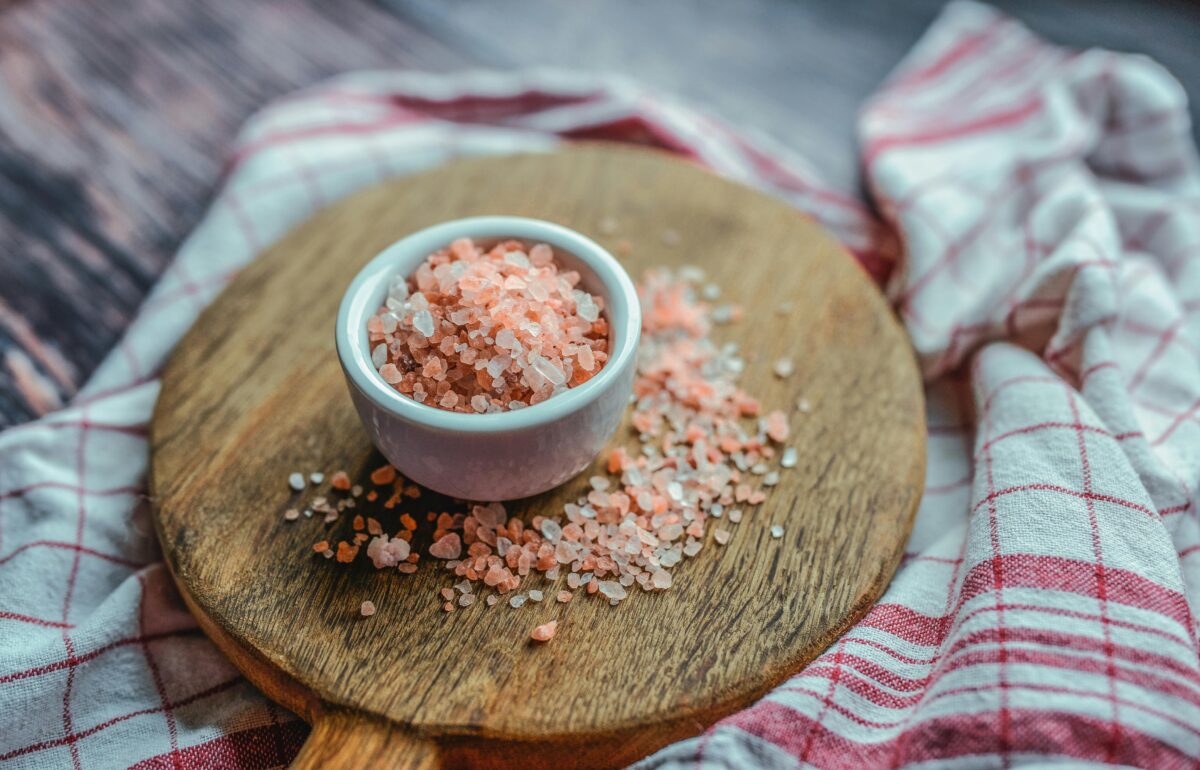
Bowl of salt. Image from: https://www.pexels.com/photo/close-up-photo-of-himalayan-salt-2624400/
One of the first food additives used for preserving meats was salt. Table salt, or sodium chloride, is an essential mineral for many organisms that regulates the ability of neurons to fire correctly. Salt was used as a preservative throughout history to prevent bacterial growth by removing water. Salt is still used today as a preservative and is present in many processed foods. While salt is essential for life, too much salt consumption has been linked to cardiovascular and kidney disease. The American Heart Association now recommends that the average person consume less than 1,500 mg of salt, equivalent to one teaspoon per day. Many Americans consume around 2,500 mg of salt, which correlates to an increased risk of cardiovascular disease. Consuming less than 500 mg of salt is also dangerous, leading to fatigue, seizures, and death. Salt is an excellent example of how a simple compound can be both healthy and harmful depending on the context in which it is examined. In other words, “the dose makes the poison.”
Emulsifiers:
Emulsifiers are used to help stabilize and mix ingredients that wouldn’t easily combine, such as oil and water, in salad dressings. Soy lecithin, polysorbates, and carrageenan are common emulsifiers used in foods such as mayonnaise, chocolate, ice cream, and nut butter. Carrageenan is an emulsifier extracted from Chondrus crispus, a red seaweed, and is commonly used in chocolate milk, toothpaste, and as a vegan alternative to gelatin. Red seaweed is found in the British Isles and has been used as a food ingredient, including in an Irish delicacy called Carrageen Moss Pudding, for centuries. The pudding has been known since the 19th century to be a cure for many flu-like ailments and is a favorite among many Irish grandmothers to force on their grandkids who complain of a cold. However, there has been recent research connecting the consumption of carrageenan to irritable bowel syndrome (IBS) through an increase in inflammation. Still, more research needs to be done to strengthen the possible connection enough to justify the removal of the ingredient. For a disease as complex as IBS, it is likely that there is not one ingredient or cause of the disease, and each person could have a different response.

Red Seaweed. Image from: Ryan Hodnett, CC BY-SA 4.0 https://creativecommons.org/licenses/by-sa/4.0, via Wikimedia Commons
While all of these additives are found to be safe in specific quantities by the Food and Drug Administration (FDA), a considerable problem associated with our modern diet is the excessive consumption of these ingredients. Like salt, many of these ingredients have an upper limit of safety, where consuming more than a small amount can have adverse health effects in some individuals. Recent research has begun to explore the idea that certain food ingredients can disrupt the microbiome, a crucial component of gut health, leading to adverse health effects. Understanding more about the microbiome and how certain foods and drugs can impact the microbiome is essential to improving health. Research on the relationship between diet and its impact on an individual is extremely complex and depends on multiple factors. What is safe for one person could be dangerous for another. As a society, we need thorough, rigorous, and unbiased research into every aspect of our food system so that all consumers are empowered to make informed decisions on the food they eat.
About the Author

Macey Wilson is a fourth-year Genetics Ph.D. student in the Roberts-Galbraith lab, studying the mechanism of neural regeneration in the planarian. Outside of lab, she enjoys reading, baking, and spending time with her husband and two cats.