Blog

The Most Deadly Animals on Earth

It's almost summer time. That means it's about to be mosquito season! These masters of annoyance happen to be the world's most deadly animal. No other animal species is responsible for as many human deaths as mosquitoes are. Humans murder about 475,000 other people each year. You know those creepy slithering snakes you fear so

What's the Point of the International Space Station(ISS)?

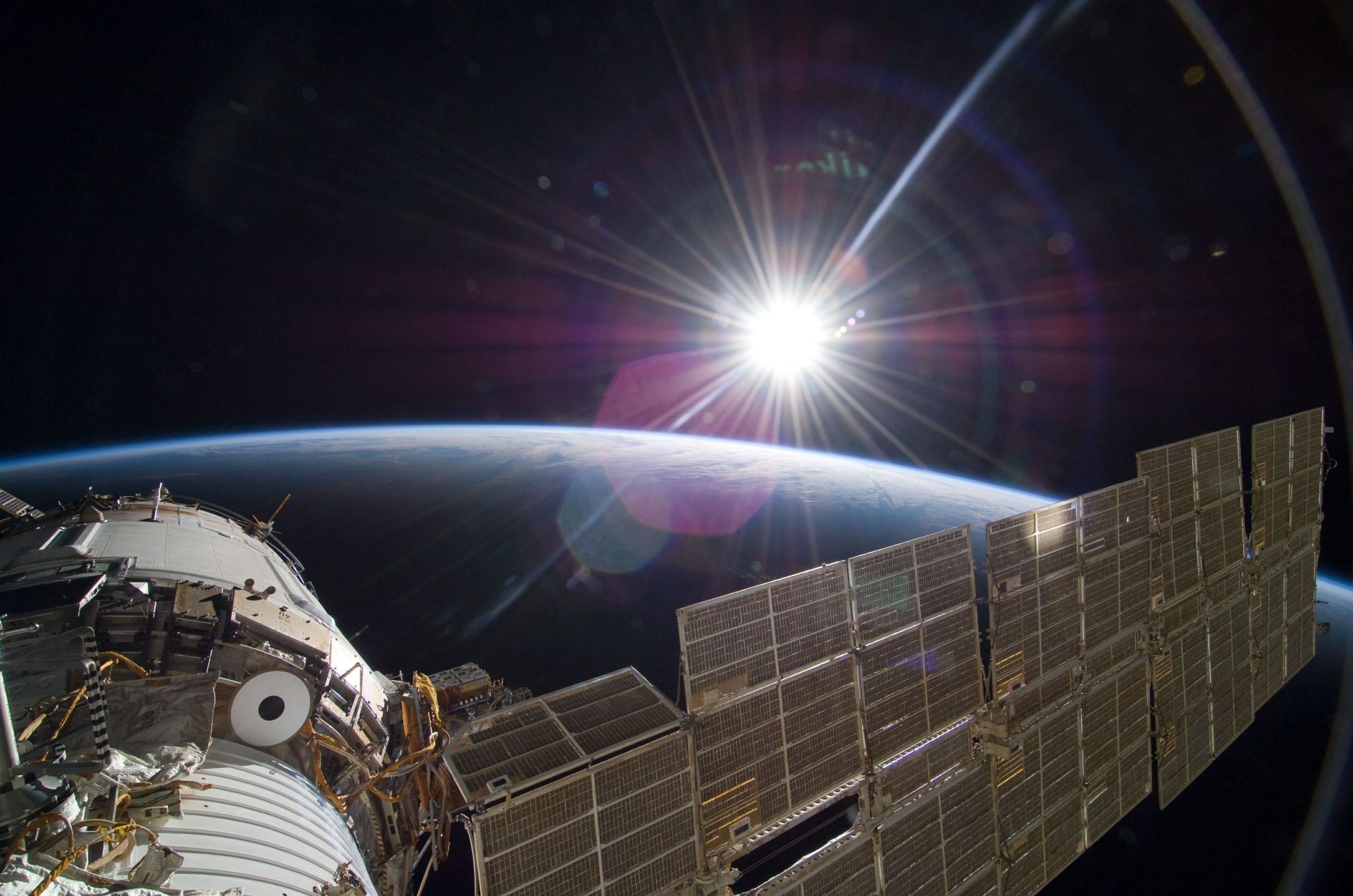
On March 1st, astronaut Scott Kelly returned to Earth after 340 days aboard the International Space Station (ISS). But why was he even up there for so long in the first place? What is the ISS? According to NASA, the ISS is a “convergence of science, technology, and human innovation that demonstrates new technologies and

The Life and Lies of Kudzu

Southerners see it everywhere: green tentacles snaking up the road signs, vines suffocating vast green meadows of trees. The infestation has become a trademark of the south: kudzu. Many Americans grow up hearing that kudzu was imported for erosion control, but the true story is more complex. For the celebration of the hundredth year since the

CubeSats and You: The Future of Space Exploration

Satellites are often thought to be large and needing millions of dollars to be built. But, can citizen science change that notion with CubeSats? Join Graham Grable as he discusses the potential for using citizen scientists and CubeSats to increase research. To learn more about the Kepler satellite, listen to the project manager for Kepler,

Electricity in their Genes: Fishy Innovations & the Birth of New Genes

Imagine swimming in a muddy river with water so murky it was impossible to see. You'd have to depend on smell or hearing to find food while avoiding predators. Some fish in this situation have gained a leg up by evolving an extra sense – they produce electrical fields and use them to sense other

What's the cost? Predicting the consequences of climate change

If you're wondering whether Earth's temperatures are rising, or whether people are responsible for global warming, then check out Hilde’s previous posts on climate change. Would global warming be really all that bad? We associate wintertime weather with unpleasantries like halting the agricultural growing season, overflowing of homeless shelters, and imperiling drivers. What will happen if

From lead to climate change: a long tradition of denialism

Despite the overwhelming scientific evidence (see previous ASO blogs on the subject, like the ones found here and here), climate change is still regularly denied by a rather large proportion of the U.S. population. Much of this denial may be traced back to certain groups and interests that benefit from the government and other players

Black History Month: the Life of George Washington Carver

We all know February is the shortest month of all, but this month and all its holidays are flying by even faster than usual this year! Punxsutawney Phil already didn't see his shadow, you've either endured Valentine's Day with tons of chocolate or enjoyed the day with your significant other (hopefully still with lots of

First Detection of Gravitational Waves

By Paige Copenhaver On February 11th, scientists from the Laser Interferometer Gravitational Wave Observatory (LIGO) announced the first ever detection of gravitational waves. Analogous to ripples caused by throwing a rock into a pond, gravitational waves are ripples in the fabric of spacetime caused by the acceleration of massive objects in space. The collision of

Shark Attack! Should we actually fear the kings of the sea?

Jaws, the 1975 American thriller film directed by the great Steven Spielberg has been hailed as one of the greatest classic movies of all time. The movie begins with a teenaged girl enjoying a swim at a supposedly carefree late night beach party, only to be suddenly pulled underwater to her horrific and untimely demise.

Maternal Effects: Genes are not all you mother gives you

Gregor Mendel, an Austrian monk, is credited with discovering the basic principles of genetics in the 1860s and known as the father of genetics. According to his results, the two parents contribute one set of genes each, which forms the genotype (genetic makeup) of the child. The genotype expresses itself in the physical characteristics (called

Scroll to Top