Bits and Pieces: Microbial Perspective
All of us know how “easy” it is to get a package delivered to our house. Access a website, click “buy”, and a few days later, it shows up at your door. As simple as it sounds, a delivery process cannot be summarized so straightforwardly due to the hidden complexity of the supply chain.
Here is a more realistic perspective: a product is manufactured (workers and parts), transported by ship or plane (teams, schedules, fuel, and coordination), stored in warehouses (sorting systems and inventory), routed onto trucks (logistics), and finally delivered by a driver to your door. Hundreds of people and many connected steps are working in tandem so a simple box can arrive at your house.

Image credit: A Brown Delivery Box with Mailing Details by Polina Tankilevitch.Retrieved from Pexels.com. Licensed under CC by 4.0.
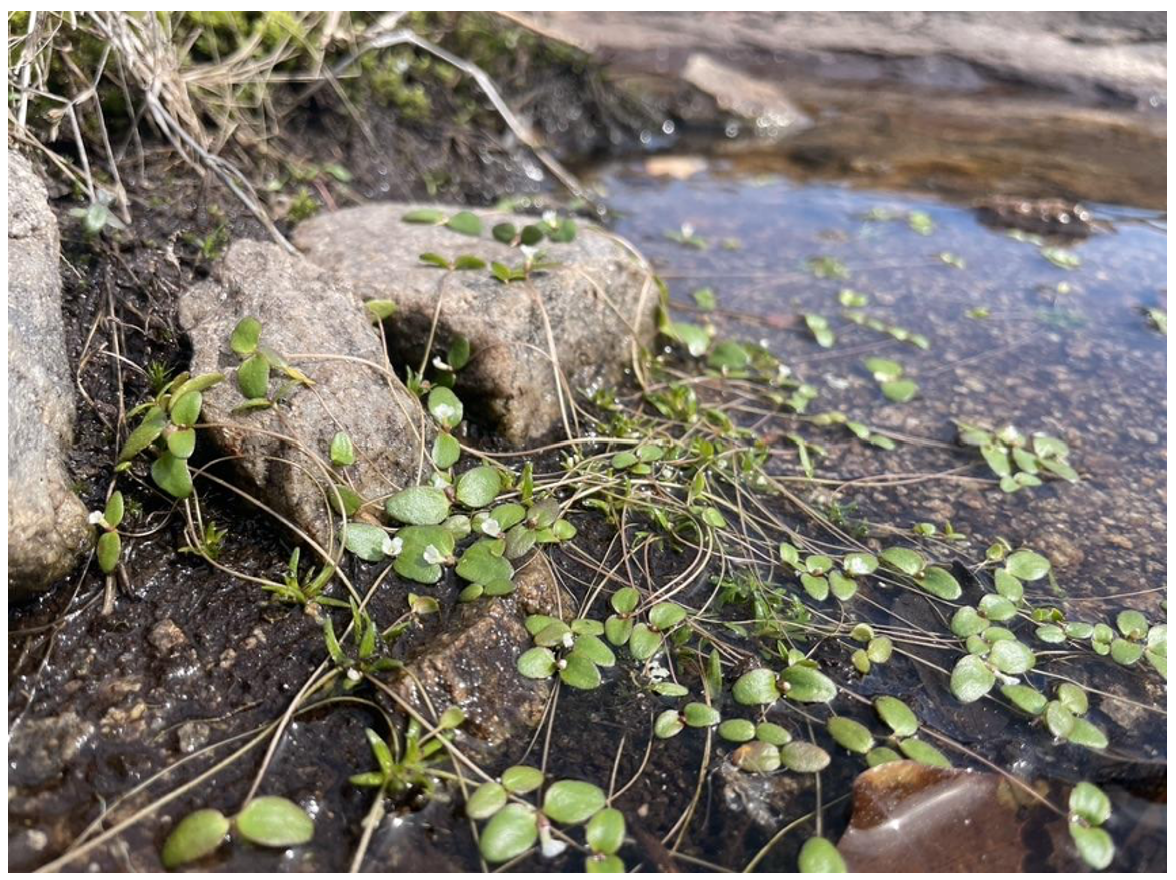
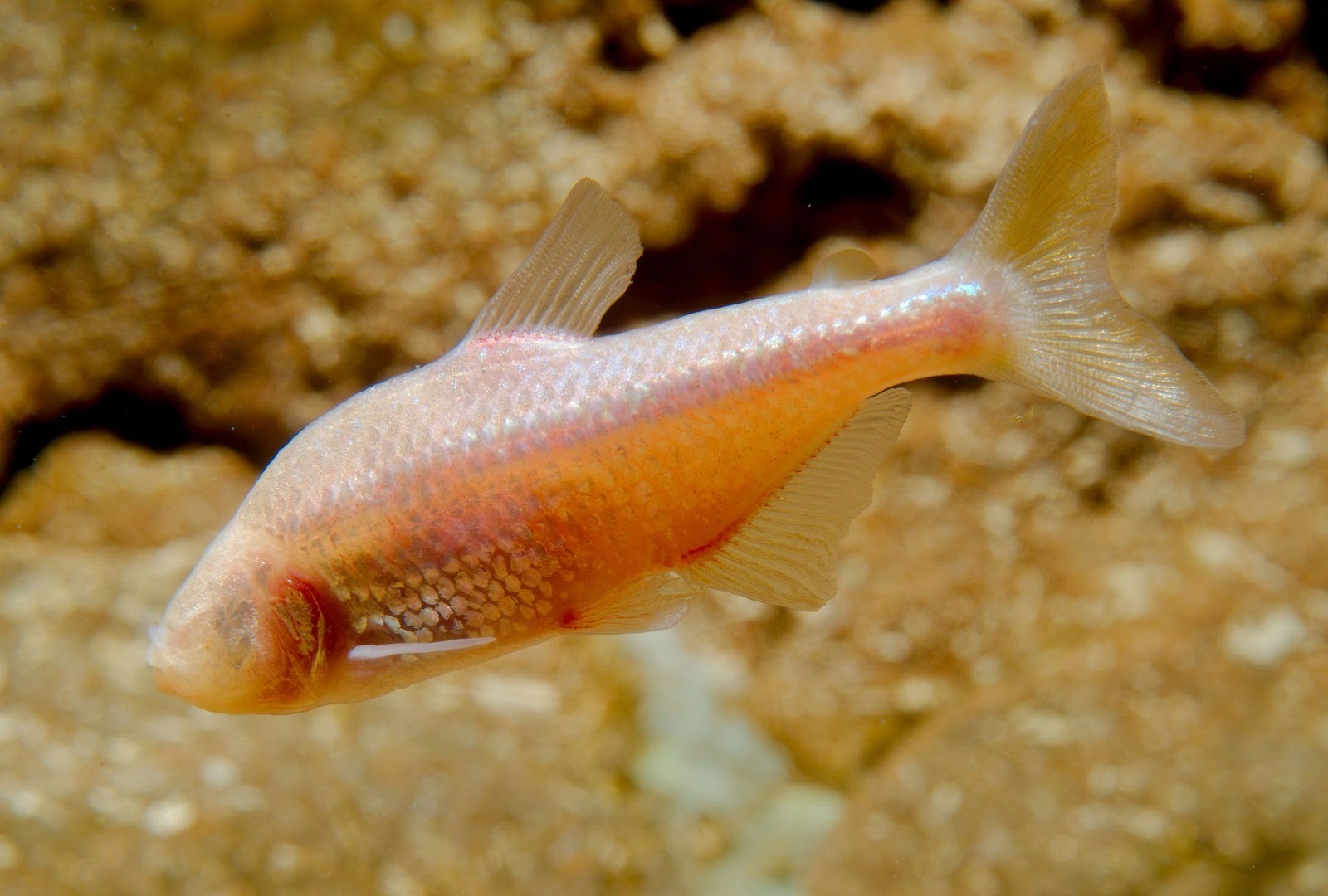
Like the package delivery supply chain, microbial communities have a hidden complexity. The term “microbial communities” refers to a consortium of microbes that cannot be seen with the naked eye. These communities can be made up of microbes like viruses, bacteria, fungi, protozoa, and algae, just to name a few. These groups of microbes are part of a process that helps Earth harbor life, such as carbon storage in the ocean, nutrient recycling, and oxygen production. It’s not one microbe doing one job but a biological network of organisms, working jointly for a larger outcome. These communities need to assemble in ways that guarantee their optimal survival in the environment. Some microbes start a process, others recycle waste, and some keep the whole system stable. We see a “simple” outcome, but the microbial system underneath is dynamic and complex.
These microbial outcomes are guaranteed due to widespread “superpowers” that they utilize, like creating metabolites, antimicrobials, enzymes, and more. And each of these “superpowers” are helping in industries, like agriculture, bio-remediation, biofuels, and pharmaceuticals. But these major breakthroughs can be traced back to single organisms, since whole communities are difficult to control and interpret.
Harnessing Individual Superpowers
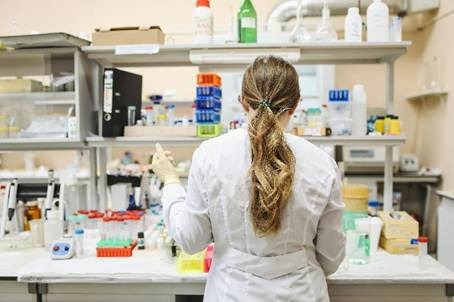
Image credit: Woman In White Long Sleeved Laboratory Gown Standing by Polina Tankilevitch. Retrieved from Pexels.com. Licensed under CC by 4.0.
Antibiotics
One of the first microbial harnessing opportunities in the biomedical field arose with the discovery of penicillin, first recorded by Alexander Fleming as a contamination of his Staphylococcus aureus (bacteria) culture by the Penicillium mold (fungi), since it appeared to be inhibiting the bacteria’s growth. Years after, thanks to these discoveries, penicillin was hitting the shelves by the 1940s and is still used as a treatment for mild bacterial infections (e.g.syphilis).
Enzymes
Enzymes are biological molecules that act as catalysts to break down or build up materials. While commonly found in microorganisms, they exist in all life forms, and our ability to harness enzymes has transformed entire scientific disciplines. An example of enzymatic opportunities arose when Taq DNA polymerase was isolated from a bacterium (Thermos Aquaticus) that can resist high temperatures from the Yellowstone National Park hot springs. With this discovery, we saw that these “super” enzymes that can resist high temperatures can be used to multiply small amounts of DNA–Polymerase Chain Reaction(PCR).A form of this technology Reverse Transcription(RT-PCR) was pivotal during the COVID-19 pandemic to amplify the genome of the virus Sars-cov2 and detected with high affinity infected individuals. Another example of enzymes harnessing is in bread production, these enzymes are mainly produced by yeast and bacteria, working in conjunction by Lactobacillus strains and Saccharomyces cerevisiae, respectively. These enzymes serve as the basis to enhance color, texture, and shelf life of bread.
Synthetic Microbial Communities (SynComs)
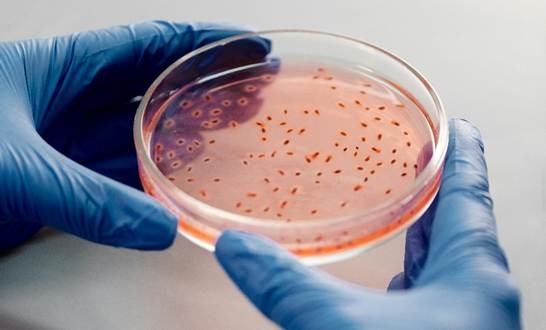
Image credit: Person Holding a Petri Dish by Edward Jenner. Retrieved from Pexels.com. Licensed under CC by 4.0.
With these promising microbial “superpowers”, you can see that everything discussed so far has focused on individual microbes. However, in nature, like in the supply chain, microbes rarely act alone due to interactions between different organisms that can enhance important processes. This is where synthetic microbial communities (SynComs) are useful. SynComs are intentionally assembled microbial communities designed to represent key members of a natural community or to perform specific functions. The goal is often to learn from nature’s design while creating a simplified, controllable system that can be tested and optimized in the lab. SynComs can mimic beneficial natural communities and enable new innovations.
SynComs- Agricultural Implications
In areas like agriculture, stable microbial partnerships can support plant growth, nutrient cycling, and resilience to an everchanging climate. Current efforts have tried to use SynComs to target these growing environmental factors. It’s been shown in agricultural settings that if seeds are inoculated with a variety of known microbes that can synergistically work together, seed germination skyrockets, plants grow taller, and root length also increases in early stages. Plants like peppers, chickpeas, and other grains are really important for human consumption since they are rich in nutrients. Trying to enhance the key microbial protagonists will translate into a higher percentage of successful plant survival, which can have great economic impacts and can also lower the overuse of chemical fertilizers and pesticides that can cause illness to farmers without proper protection.
SynComs – Biomedical Implications
Antibiotic-resistant superbugs represent a growing crisis, and SynComs have emerged as a promising complementary and/or alternative treatment. A research group demonstrated that a SynCom composed of 10 bacterial strains successfully cleared Clostridioides difficile infection in mice and ensured survival. The group reported improved outcomes relative to infected controls, including 0% mortality in the treatment group versus 60% mortality in the infected group (not treated with the SynComs). This is significant because rising C. difficile incidence and increasing antimicrobial resistance demand that alternative treatments be explored, and SynComs represent a promising tool.
While research on synthetic communities seems like a promising step forward, more research remains. Unlike single organisms, microbial communities present a dynamism and complexity that give rise to fundamental questions about the stability of SynComs over time. Since functionality is difficult to control, predicting microbial interactions within a community requires highly specialized, interdisciplinary expertise spanning microbiology, mathematical modeling, enzymology, and more. Despite these obstacles, we are entering an era of unprecedented scientific capability, with emerging technologies likely to close these gaps. Understanding natural microbial designs and using them as a blueprint for innovation remains one of the most powerful frameworks science has to offer.
About the Author

Damián is a PhD student in the Hoarfrost Lab at the Institute of Bioinformatics at the University of Georgia. His current research focuses on microbial ecology and artificial intelligence, with the goal of predicting phenotypic behaviors of microbial communities that play an essential role in the carbon cycling process. He earned his undergraduate degree from the Interamerican University of Puerto Rico, majoring in Microbiology and minoring in Computer Science. When Damián isn’t working on his research, you’ll probably find him running, hitting the gym, or singing in the shower.